the experience of passing

Passing Through Zero: A dimensional reflection on life, death, and becoming
We do not instantly cease to exist for all eternity when we die. Rather, we pass through zero, shifting in coordinate and moving from one expression of existence into another. That is, when we take into consideration linear algebra and how our lives may relate to the zero vector. Truly, only God knows what happens when we die yet I feel compelled to dispel superficial scientists who teach utter nonsense like humans are a byproduct of ape life and make ridiculous claims such as when we die everything ends and we're stupid if we think otherwise.
As it relates to math and science. Two concepts in particular have always unsettled us:
1. Zero, the place we are not allowed to define because of mathematical law yet seem to have a pretty good understanding of.
2. Multidimensionality - the reality that life does not unfold within the frameworks of time and space alone.
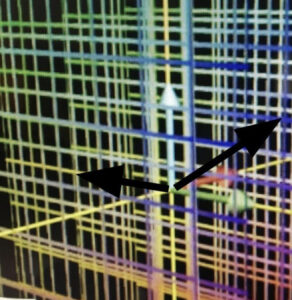
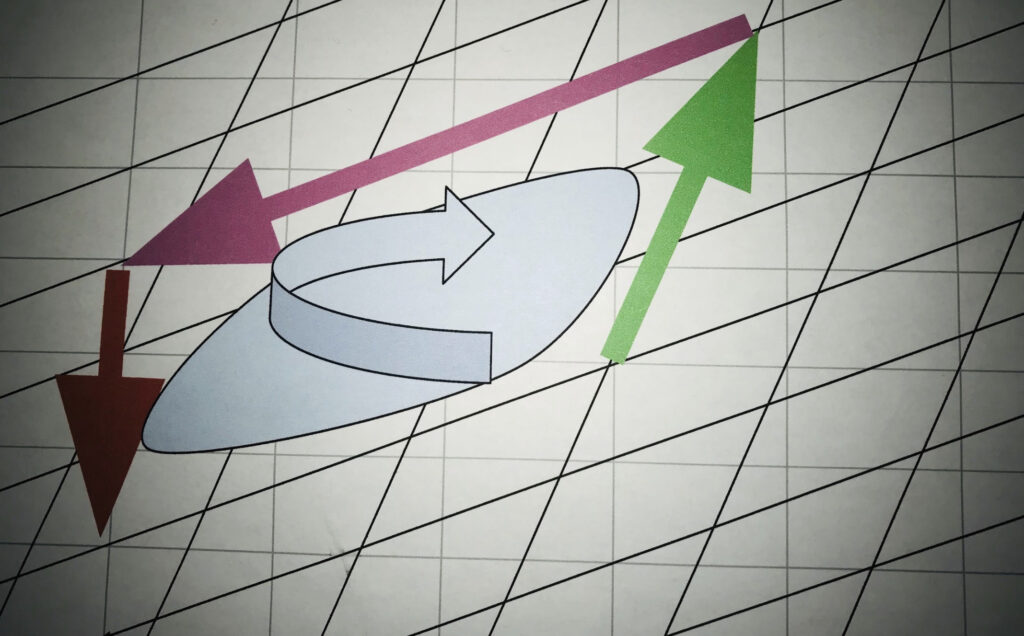
Linear algebra sits precisely at the intersection of these two mysteries. A living matrix - filled with variables of our existence . This profound mathematical tool allows multiplication of an endless series of equations. The rule is for every unknown there must be an equation. In addition, the lines of equations must form a basis- a unique finite series of linear elements. Then, perform matrix operations so as to solve for the zero vector. As I will show, the zero vector represents a collapse of all dimension, yet no loss of the defining elements that created the basis in the first place.
Zero is not absence. Zero is origin - the still point where every dimension waits to become something new.
This mathematical reality correlates with human life as shown by the existentialist philosopher Soren Kierkegaard, who believed that life is lived through different modes of being, each shaped by the choices we make and the forces we allow to act upon us. That is to say, a life of many dimensions.
According to Kierkegaard, while in our earliest and most restless mode of living, we expand outward. We gather experiences. So, in another sense, we pursue possibilities across many dimensions – work, health, relationships, legacy, ambition. It is life in its widening phase. The matrix is full, shifting, alive. Kierkegaard would say we are living aesthetically – carried by impulses, drawn toward what sparks and moves, pulled into the multiplicity of life’s offerings. As we move through the world, something in us tightens. We begin to choose what matters. We apply conscious forces – effort, kindness, commitment, the desire to do right – and in doing so, we alter the very structure of our lives.
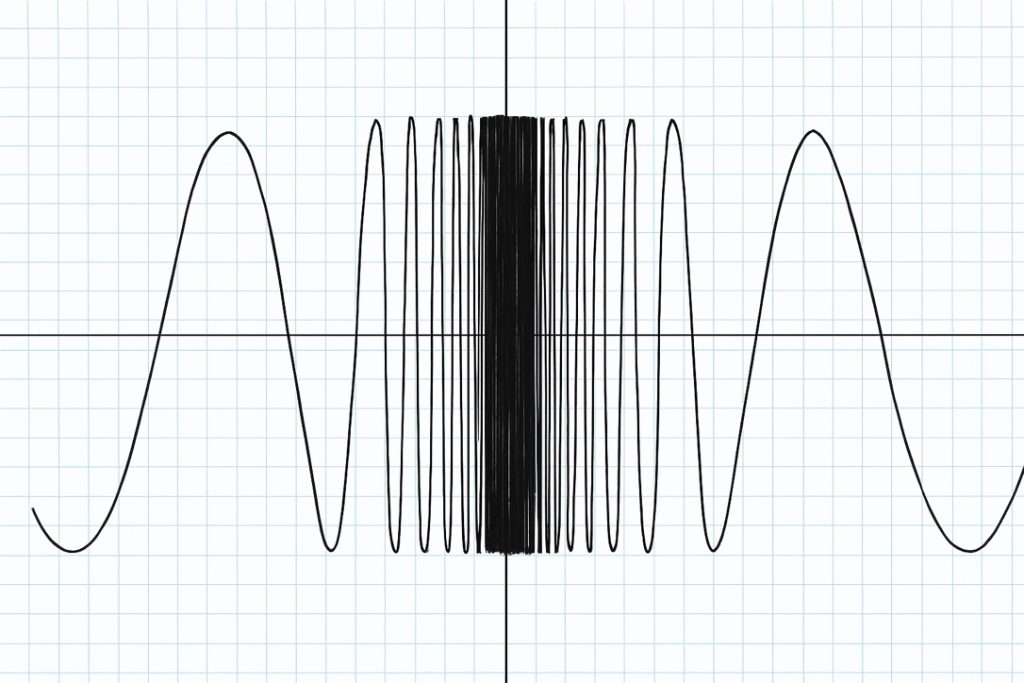
The Matrix becomes organized. Certain dimensions expand while others recede. We move with intention rather than impulse. This is the ethical phase of being: a life shaped, not by sensation, but by inward responsibility. Yet, nevertheless, the moment will come that no one escapes. The last forces are applied. The matrix multiplies one final time, and all worldly dimensions collapse to zero: Zero money, Zero health, Zero earthly happiness, Zero legacy, at least in the sense we measure it here. We arrive at the coordinate where all axes meet – the origin of the graph, the origin of ourselves. We move into the unknown experience where calculations arrive at the ordinate of our matrix. Death is that threshold. But thresholds are not endings. They are crossings. They are dimensionality beyond zero. In mathematics, the zero vector is not nothingness. It is the point from which new dimensionality can unfold under forces not yet applied. It is the place where the finite falls away and something deeper waits to emerge.
Death is not the end of dimensionality but the beginning of another. Zero is the origin of what comes next. What unfolds beyond this dimensionality, in my opinion, depends on our responses to the forces that move us while here on earth together. For example, kindness toward others, courage when confronted with adversity, and perhaps a humble approach to our creator God. Life does not end. It evolves. And when it reaches zero, we enter something new. We pass.